
Everything You Need to Know to Start Your Healing Journey


Discover what Reiki is, how it works, its benefits, what happens during a session, and simple ways to begin your Reiki journey.
Table of Contents
- What is Reiki?
- The History of Reiki
- How Does Reiki Work?
- The Five Principles of Reiki
- Benefits of Reiki
- What Happens During a Reiki Session?
- The Seven Chakras and Reiki
- Can Anyone Learn Reiki?
- Reiki Levels Explained
- Reiki Self-Healing for Beginners
- Myths About Reiki
- Frequently Asked Questions
- Final Thoughts
What Is Reiki?
Reiki is a gentle energy healing practice that originated in Japan in the early 20th century. The word Reiki combines two Japanese words:
- Rei = Universal
- Ki = Life Energy
Together, Reiki can be understood as “Universal Life Energy.”
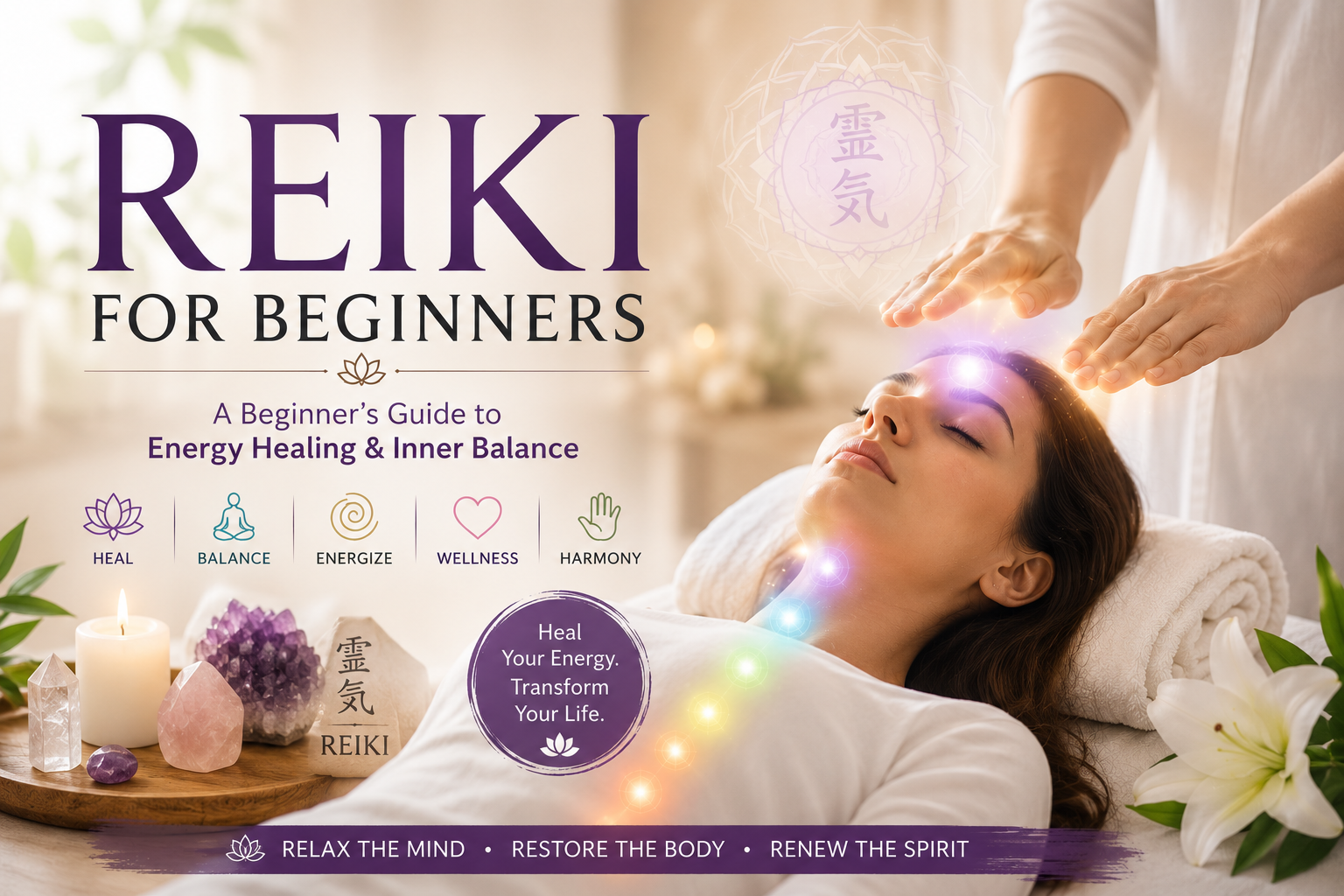
Practitioners believe this energy flows through all living beings. During a Reiki session, they lightly place their hands on or just above the body with the intention of supporting relaxation and overall well-being.
Many people experience Reiki as deeply calming and restorative. While some practitioners describe Reiki in terms of energy flow, scientific evidence for these mechanisms remains limited. Reiki is best viewed as a complementary wellness practice rather than a replacement for medical treatment.
The History of Reiki


Reiki was developed in Japan by Mikao Usui in 1922.
According to Reiki tradition:
- Mikao Usui undertook a period of meditation and spiritual practice on Mount Kurama.
- He later developed a healing system focused on compassion, mindfulness, and gentle touch.
- Reiki spread from Japan to Hawaii and eventually throughout the world.
Today, Reiki is practiced in more than 100 countries.
How Does Reiki Work?
During a Reiki session, the practitioner may:
- Place hands lightly on different areas of the body
- Hover hands slightly above the body
- Create a calm, peaceful environment
- Encourage deep relaxation
People commonly report:
- Feeling warm or cool sensations
- Tingling
- Deep relaxation
- Emotional release
- Mental clarity
- Better sleep after sessions
Researchers suggest that some benefits may arise from relaxation, focused attention, caring interaction, and stress reduction, even though a specific energy-transfer mechanism has not been conclusively demonstrated.
The Five Principles of Reiki
One of the most beautiful teachings in Reiki is living by five daily principles.
Just for today…
🌸 I will not worry.
🌸 I will not be angry.
🌸 I will be grateful.
🌸 I will work honestly.
🌸 I will be kind to every living thing.
These principles encourage mindfulness, compassion, and emotional balance.
Benefits of Reiki
Many people choose Reiki to support their overall well-being.
🌿 Reduces Stress
Reiki sessions often create a deep sense of calm.
😌 Encourages Relaxation
Many people feel refreshed after a session.
❤️ Emotional Support
Reiki may help people feel more emotionally balanced.
🧠 Improves Mental Clarity
A relaxed mind often finds it easier to focus.
😴 Better Sleep
Many recipients report sleeping more peacefully afterward.
🌈 Supports Spiritual Growth
For those interested in spirituality, Reiki can become part of a regular mindfulness or meditation practice.
What Happens During a Reiki Session?


A typical Reiki session lasts 45–60 minutes.
Step 1: Relaxation
You’ll lie comfortably on a treatment table while fully clothed.
Step 2: Gentle Hand Positions
The practitioner places or hovers their hands over various areas such as:
- Head
- Shoulders
- Chest
- Abdomen
- Legs
- Feet
Step 3: Quiet Rest
Soft music, calming breathing, or silence helps create a peaceful atmosphere.
Step 4: Completion
Many people leave feeling relaxed, refreshed, and mentally calmer.
The Seven Chakras and Reiki
Although Reiki itself is not dependent on chakra theory, many practitioners incorporate the seven traditional chakras into their sessions.
| Chakra | Color | Associated Themes |
|---|---|---|
| Root | ❤️ Red | Stability and grounding |
| Sacral | 🧡 Orange | Creativity and emotions |
| Solar Plexus | 💛 Yellow | Confidence and personal power |
| Heart | 💚 Green | Love and compassion |
| Throat | 💙 Blue | Communication |
| Third Eye | 💜 Indigo | Intuition |
| Crown | 🤍 Violet/White | Spiritual connection |
Can Anyone Learn Reiki?
Yes.
Reiki is often taught through structured courses led by experienced teachers. Training usually includes:
- Reiki philosophy
- Hand positions
- Ethics
- Self-practice
- Guided exercises
Many people begin with Reiki to support their own well-being before using it to help family members or clients.
Reiki Levels Explained
Level 1 (Shoden)
Learn the basics of Reiki and self-healing.
You’ll typically practice:
- Self-treatment
- Simple hand positions
- Daily Reiki practice
Level 2 (Okuden)
Introduces additional techniques that may include:
- Distance Reiki (depending on the tradition)
- Mental and emotional healing practices
- Traditional Reiki symbols (where taught)
Master Level (Shinpiden)
Focuses on deeper study, personal development, and, in some lineages, teaching Reiki to others.
Simple Reiki Self-Healing Routine
Even if you’re new to Reiki, you can create a calming self-care routine:
🌸 Find a Quiet Space
Sit comfortably without distractions.
🌸 Take Deep Breaths
Slow your breathing and relax.
🌸 Set an Intention
For example:
“May I experience peace, clarity, and well-being.”
🌸 Place Your Hands Gently
Rest your hands on areas such as your heart, abdomen, or shoulders, focusing on your breath and body awareness.
🌸 Finish with Gratitude
Take a moment to appreciate the time you’ve given yourself.
Common Myths About Reiki
Myth: Reiki is a religion.
Fact: Reiki is a wellness practice and is not tied to any particular religion.
Myth: Reiki replaces medical treatment.
Fact: Reiki should be used as a complementary practice, not a substitute for professional healthcare.
Myth: You need psychic abilities.
Fact: No special psychic ability is required to learn Reiki.
Myth: Reiki works instantly for everyone.
Fact: People’s experiences vary. Some notice immediate relaxation, while others find benefits develop over time.
Frequently Asked Questions
Is Reiki safe?
For most people, Reiki is considered a low-risk complementary wellness practice. It should not replace appropriate medical care.
Do I need to believe in Reiki?
No. Many people participate simply because they enjoy the relaxing experience.
How many sessions should I take?
There is no fixed number. Some people schedule occasional sessions, while others include Reiki in an ongoing wellness routine.
Can Reiki be practiced at home?
Yes. After appropriate training, many people practice Reiki as part of their personal self-care routine.
Final Thoughts
Reiki is a gentle practice centered on relaxation, mindfulness, and compassionate presence. Whether you are curious about spiritual wellness or simply looking for a calming self-care practice, Reiki can be a meaningful addition to a balanced lifestyle.
Approach it with an open mind, realistic expectations, and remember that it works best as a complement to—not a replacement for—conventional medical care.